
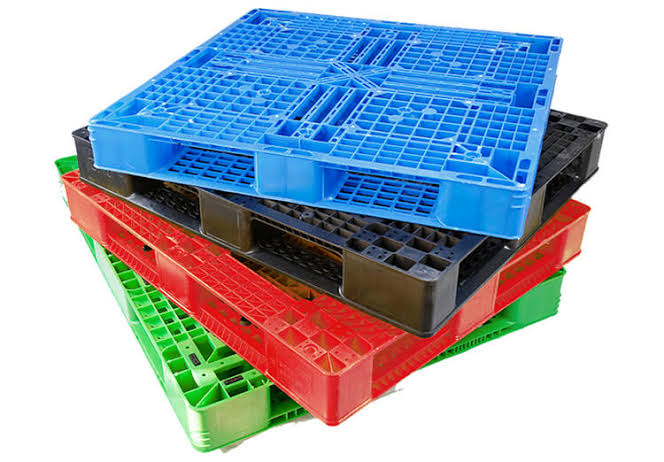
Plastic pallets are commonly manufactured from durable thermoplastic materials, especially high-density polyethylene (HDPE) and polypropylene (PP). Depending on the product and application, manufacturers may also use recycled or post-consumer plastic, blends of plastic materials, and other engineered formulations. Brambles, for example, reports using both virgin and recycled plastic in its reusable plastic products, with material selection depending on safety and performance requirements. The exact material varies by manufacturer, pallet design, required strength, temperature conditions, hygiene requirements, and intended use.
What Are Plastic Pallets Made Of?
HDPE (High-Density Polyethylene) is one of the most common materials for plastic pallets. It offers excellent durability and impact resistance, which helps pallets absorb the shocks of forklift handling and rough treatment. HDPE also resists moisture, making it suitable for humid or wet environments, and it performs well in cold temperatures where other plastics may become brittle . Common applications include general warehouse logistics, cold storage, and food handling where moisture resistance matters.
Polypropylene (PP) is another widely used material, valued for its stiffness and lightweight characteristics. PP pallets tend to be more rigid than HDPE, which can reduce deflection under heavy static loads. PP also has a higher melting point, making it suitable for applications involving high-temperature washdown or steam cleaning . Common industrial and logistics applications include automotive parts handling, automated storage and retrieval systems (AS/RS), and pharmaceutical cold chains where dimensional stability is critical.
Recycled Plastic can be incorporated into some pallet products. Recycled plastic differs from virgin plastic in that it has been previously used or processed, while virgin plastic is produced directly from petrochemical feedstocks. The percentage of recycled content can vary between products—some pallets use modest recycled fractions (commonly 10–30%), while others may use higher percentages depending on performance requirements and testing . Recycled plastic is not automatically weaker or stronger than virgin plastic; well-sorted and properly processed recycled material can perform comparably in many applications, though variability increases with higher recycled content .
Plastic Blends and Engineered Materials are used when manufacturers need to achieve specific performance requirements. Formulations can be designed around impact resistance, stiffness, temperature performance, hygiene, or other needs. For example, glass fibers can be added to increase stiffness and heat deflection temperature, though this typically reduces impact toughness . Mineral fillers like calcium carbonate increase stiffness modestly at lower cost. Impact modifiers can be added to PP to improve low-temperature performance .
Virgin Plastic vs. Recycled Plastic Pallets
Virgin plastic is unblended resin produced directly from petrochemical feedstocks. It offers consistent strength, predictable performance, and stable quality between batches. Virgin material is often required for food, pharmaceutical, and export applications where strict compliance and documentation are necessary .
Pre-consumer recycled material comes from industrial scrap or manufacturing waste that never reached the consumer. It is typically cleaner and more consistent than post-consumer material.
Post-consumer recycled material comes from products that have been used and discarded by consumers, such as laundry bottles or packaging. It requires sorting, cleaning, and processing before reuse .
Manufacturers may choose virgin material when hygiene, food-contact safety, or performance consistency is prioritized. Recycled material may be selected for cost savings, sustainability goals, or general logistics applications where strict food-contact standards don’t apply. Brambles reported that 41.4% of recycled and upcycled content was included in its plastic product purchases in FY25, showing that recycled content can be a significant part of some commercial pallet systems . Not every plastic pallet follows the same material specification.
Why Is HDPE Commonly Used for Plastic Pallets?
HDPE is widely used because it combines several desirable properties:
- Durability and impact resistance: HDPE flexes under impact rather than cracking, which helps it survive forklift collisions and rough handling .
- Moisture resistance: HDPE does not absorb water, so it won’t swell, rot, or harbor mold and bacteria.
- Cold-temperature performance: HDPE retains ductility at low temperatures better than unmodified PP, making it suitable for cold storage and freezer applications .
- Moldability: HDPE can be injection molded, thermoformed, or processed through other methods into complex pallet structures.
HDPE is not used in every plastic pallet. Some pallets are made from PP, blends, or other materials depending on the application.
Why Is Polypropylene Used in Plastic Pallets?
PP offers a different performance profile:
- Stiffness and weight balance: PP is stiffer than HDPE, which can reduce deflection under sustained loads. It is also slightly lighter, which matters for shipping costs .
- Heat resistance: PP has a higher melting point (approximately 160–170°C versus HDPE’s 120–130°C), making it suitable for high-temperature washdown and steam cleaning .
- Use in molded logistics products: PP is commonly selected for applications requiring dimensional stability, such as automated storage systems and racking-heavy environments .
Manufacturers may select PP when stiffness, heat resistance, or weight savings are more important than impact toughness. PP can become brittle at very low temperatures unless impact-modified grades are used .
How Are Plastic Pallets Manufactured?
Common manufacturing processes include:
- Material selection: Virgin or recycled HDPE, PP, or blends are chosen based on performance requirements.
- Material preparation: Pellets or flakes are dried, mixed with additives if needed, and prepared for processing.
- Forming: The plastic is heated and shaped. Injection molding injects molten plastic into a mold under pressure. Thermoforming heats plastic sheets and forms them over or into molds. Some processes use a combination of methods .
- Cooling and finishing: The formed pallet is cooled, trimmed, and any burrs removed.
- Inspection: Finished pallets are checked against specifications for dimensions, strength, and quality.
Not every plastic pallet is made using one identical process. The method depends on the pallet design, production volume, and manufacturer’s equipment.
Are Plastic Pallets Made From Recycled Plastic?
Some are, and some are made partly or entirely from virgin plastic. Recycled-content levels vary widely between products and manufacturers.
- Material selection depends on product requirements. Food-contact applications may require virgin or specially certified recycled material .
- Some applications prioritize hygiene or performance, leading manufacturers to choose virgin resin .
- Recycled plastic can be recovered and processed into new products in closed-loop systems. Damaged plastic products can be ground, washed, and remolded into new pallets .
As an industry example, Brambles reported that 41.4% of recycled and upcycled content was included in its plastic product purchases in FY25 . This shows recycled content can be a significant part of some commercial pallet systems, but it is not a universal specification across all plastic pallets.
What Makes Plastic Pallets Strong?
Strength does not depend only on the type of plastic. Several factors interact:
- Material formulation: Additives, fillers, and impact modifiers affect strength.
- Pallet thickness: Thicker walls and ribs increase load capacity.
- Rib and support design: Internal geometry distributes loads efficiently.
- Deck structure: Solid or open decks perform differently.
- Feet or runners: The base design affects stability and racking performance.
- Reinforcement: Internal steel tubes or fiberglass rods can dramatically increase racking strength .
- Manufacturing quality: Consistent processing and inspection ensure reliable performance.
- Load distribution: Even loading maximizes capacity.
- Temperature: Extreme heat or cold affects plastic properties.
- Handling method: Forklift entry points and handling practices affect longevity.
Two pallets made from the same plastic can have different load capacities because their designs and specifications differ.
Can Plastic Pallets Be Recycled?
Many plastic pallets can be recycled at the end of their useful life, depending on material type, contamination, local recycling infrastructure, and manufacturer processes . HDPE and PP are both commonly recyclable plastics.
Closed-loop systems can grind and remold damaged plastic products into new products. Brambles has documented this type of recycling process for damaged plastic products . However, not every plastic pallet is automatically recyclable everywhere. Contamination, mixed materials, and lack of local infrastructure can limit recycling options.
How to Choose the Right Plastic Pallet Material
Consider these factors when selecting a plastic pallet:
- Intended load: Static, dynamic, and racking capacities
- Use type: Floor storage, racking, or automated systems
- Warehouse conditions: Temperature, humidity, cleanliness
- Temperature exposure: Cold storage, ambient, or high-heat washdown
- Moisture exposure: Wet or dry environments
- Food or pharmaceutical requirements: Hygiene and compliance needs
- Frequency of reuse: One-way, limited reuse, or high-cycle
- Handling equipment: Forklift, pallet jack, or automated systems
- Hygiene requirements: Washdown, sanitization, food-contact
- Recycled-content preferences: Sustainability goals and performance trade-offs
- Manufacturer specifications: Tested load ratings and material data
- Total cost over expected service life: Not just purchase price
Plastic Pallets vs. Wooden Pallets
The choice between plastic and wood depends on the application.
Moisture resistance: Plastic does not absorb water or harbor mold. Wood can swell, rot, and support bacterial growth.
Weight consistency: Plastic pallets are molded to consistent dimensions and weight. Wood pallets vary due to natural material.
Hygiene and cleaning: Plastic is easier to sanitize and suitable for food-contact applications. Wood is more difficult to clean thoroughly.
Repairability: Wood pallets can often be repaired with replacement boards. Plastic pallets are generally not repairable once structurally compromised.
Reusability: Plastic pallets typically withstand more handling cycles than wood.
Initial cost: Plastic pallets generally cost more upfront.
Recycling: Both materials can be recycled, though infrastructure and processes differ.
Application requirements: Plastic suits hygiene-critical, automated, and closed-loop systems. Wood suits general industrial and one-way shipping.
Final Thoughts
Plastic pallets are mainly made from thermoplastics such as HDPE and PP, with some products incorporating recycled plastic or engineered material blends. HDPE is valued for impact resistance and cold-temperature performance; PP is valued for stiffness and heat resistance. Recycled content varies between products and is not automatically weaker or stronger than virgin material. Buyers should check the manufacturer’s material specification and tested load ratings rather than assuming every plastic pallet is made from the same type of plastic or performs identically.
One Response
Interesting article! Plastic pallets are a popular choice because they are lightweight, durable, and easy to clean. Understanding the materials used in their manufacturing helps businesses choose the right pallets for their storage and transportation needs. For businesses looking for quality wooden pallets and custom carpentry solutions, you can also visit https://alrudhwancarpentry.ae/.