
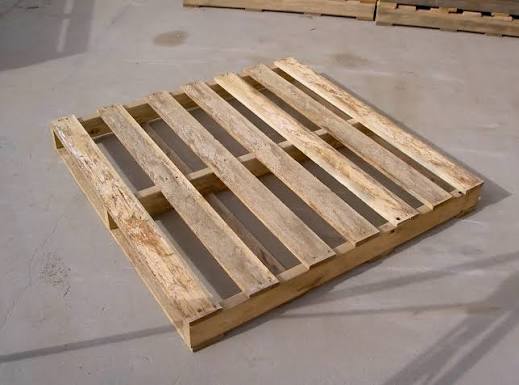
Yes, many damaged wooden pallets can be repaired and reused, but the decision depends on the type and severity of the damage. A loose deck board or a minor crack is often a straightforward repair. A pallet with a snapped stringer, widespread rot, or chemical contamination is a different story entirely. Before any pallet goes back into service, it should be inspected, and badly damaged or structurally compromised pallets may need to be removed from service permanently.
Understanding the difference between cosmetic wear and structural failure is the key skill. Get that right, and repairing pallets becomes a safe, cost-effective part of your operation rather than a liability.
1. Can Damaged Wooden Pallets Really Be Repaired?
Wooden pallets take a beating. They get dropped by forklifts, overloaded, exposed to moisture, dragged across rough surfaces, and stacked in ways they were never designed to handle. Over time, this abuse shows up as broken boards, cracked stringers, loose fasteners, and surface damage.
Some of that damage is repairable. Wood is a forgiving material, and a pallet is essentially a simple assembly of boards, stringers or blocks, and fasteners. If the core structural members are sound, replacing a few boards or re-driving fasteners can restore the pallet to safe working condition.
The critical distinction is between cosmetic damage and structural damage:
- Cosmetic damage includes surface scuffs, minor splintering, discoloration, and small dents. These affect appearance but not load-bearing capacity.
- Structural damage includes broken stringers, cracked blocks, split deck boards that span support points, and loose fasteners that compromise the pallet’s rigidity. These directly affect whether the pallet can safely carry its rated load.
A repaired pallet still needs inspection before reuse. Repair restores function only if the repair itself is sound and the remaining original components are still fit for service. A pallet that has been repaired once may not be suitable for a second or third repair if the surrounding wood is weakening.
2. What Types of Pallet Damage Can Be Repaired?
Many common types of pallet damage fall into the repairable category, provided the damage is localized and the rest of the pallet remains structurally sound.
Broken or loose deck boards are among the most common repairable issues. If a single top or bottom board is cracked, split, or loose but the stringers beneath it are intact, that board can be replaced or re-secured.
Missing boards can often be replaced with matching lumber, restoring the pallet’s load distribution and surface continuity.
Cracked deck boards that do not extend into the stringer connections may be repairable, especially if the crack is short and the board still spans its supports.
Damaged stringers or blocks are more serious. A stringer with a minor crack near an edge might be repairable, but a stringer that is broken through, severely split, or rotted at a connection point usually means the pallet should be retired. Stringers and blocks carry the primary structural load, so their condition is non-negotiable.
Loose or damaged fasteners are often the easiest fix. Re-driving nails or replacing them with appropriate fasteners can tighten a pallet that has simply worked loose over time.
Minor splitting at board ends or around nail holes may be acceptable if the split does not compromise the board’s strength or the pallet’s overall rigidity.
Surface wear such as splintering, minor gouges, or roughness can sometimes be sanded or planed, though this is less common in industrial pallet repair than simple component replacement.
Repairability always depends on the location and severity of the damage. A cracked board in the middle of a pallet is different from a cracked board at a corner where it connects to a stringer.
3. When Should a Wooden Pallet Be Repaired?
Not every damaged pallet is worth repairing. Several factors determine whether repair makes sense:
- Overall structural condition: If the frame—stringers, blocks, and their connections—is sound, repair is usually worthwhile. If the core structure is compromised, replacement is the better choice.
- Type and amount of damage: One or two damaged boards are a routine repair. Damage across multiple structural components suggests the pallet is near the end of its service life.
- Intended load: A pallet used for light loads may tolerate repairs that would be unacceptable for heavy-duty applications. Always match the repaired pallet’s condition to its intended use.
- Frequency of reuse: A pallet that will be used once and discarded may not justify repair. A pallet in a closed-loop system with many trips ahead may be worth repairing multiple times.
- Cost of repair compared with replacement: If repair costs approach or exceed the price of a replacement pallet, replacement is usually the smarter choice. Repair is most economical when it extends a pallet’s life at a fraction of replacement cost.
- Whether the pallet can be restored to a safe condition: This is the bottom line. If repair cannot restore the pallet to a condition that safely supports its intended load, the pallet should not be repaired for reuse.
4. How Are Wooden Pallets Repaired?
Pallet repair follows a logical sequence, whether it is done manually or with automated equipment. The general process is:
- Inspect the pallet: Check all components—top deck boards, bottom deck boards, stringers or blocks, and fasteners—for damage, rot, or contamination.
- Identify damaged components: Determine which parts are structurally compromised and which are merely cosmetic.
- Remove unsuitable boards or fasteners: Pull damaged boards and any fasteners that are loose, bent, or no longer holding. This step requires care to avoid further damaging the surrounding wood.
- Replace damaged parts with suitable materials: Use replacement boards or components that match the original specifications in thickness, width, species, and grade. Mismatched materials can create weak points.
- Secure components properly: Fasten replacement parts with appropriate nails, staples, or screws. Fastener type, length, and placement matter for structural integrity.
- Inspect the finished pallet: After repair, re-inspect the pallet to confirm that all components are secure and the structure is sound.
- Test or verify it for its intended use where appropriate: For critical applications, the repaired pallet may need to be load-tested or otherwise verified before it goes back into service.
This overview is not a substitute for proper training or professional repair services. Pallet repair involves safety risks, and repaired pallets must meet the same performance standards as new ones for their intended use.
5. When Should a Damaged Pallet Not Be Reused?
Some pallets are beyond repair, and attempting to return them to service creates real safety and compliance risks. Warning signs include:
- Severely broken stringers: A stringer that is broken through, split along its length, or missing sections cannot reliably carry loads. This is a structural failure, not a cosmetic issue.
- Major structural cracks: Cracks that extend through load-bearing components, especially at connection points, compromise the pallet’s ability to distribute weight.
- Extensive rot: Rot weakens wood from the inside. A pallet with widespread rot may look intact but fail suddenly under load.
- Mold or contamination: Pallets exposed to mold, chemicals, or other contaminants may pose health and safety risks, especially in food, pharmaceutical, or sensitive applications. Contaminated pallets should be removed from service and handled according to applicable regulations.
- Damage that cannot be repaired to a safe standard: If restoring the pallet to safe working condition is not possible or not cost-effective, it should be retired.
Pallets that fail these criteria should be removed from service and either recycled, dismantled for salvageable components, or disposed of according to local regulations. The short-term savings from reusing a badly damaged pallet are never worth the risk of a collapsed load, injured worker, or damaged product.
Final Thoughts
Wooden pallet repair and reuse is a practical way to extend the life of your pallet fleet, reduce waste, and control costs. Many common types of damage—loose boards, minor cracks, and worn fasteners—can be repaired safely when the pallet’s core structure remains sound. The key is honest inspection and knowing when a pallet has reached the end of its service life.
Repair only what can be restored to safe working condition. Retire what cannot. And always match the repaired pallet’s condition to its intended load. Done correctly, pallet repair is a smart, sustainable practice that supports both safety and efficiency in your operation.