
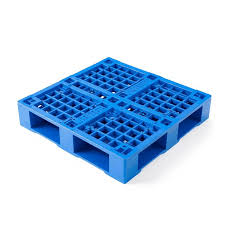
Plastic pallets do not have one fixed lifespan. Their service life depends on pallet quality, plastic type, design, load, handling frequency, storage conditions, temperature, UV exposure, and how they are used. Some high-quality plastic pallets are designed for repeated reuse and can complete many handling cycles, but manufacturers’ test results should not be presented as a guaranteed lifespan for every pallet.
How Long Do Plastic Pallets Usually Last?
There is no universal number of years that applies to every plastic pallet. A better way to think about lifespan is to distinguish between calendar age and number of handling cycles. A pallet that sits idle in a warehouse may last many years, while the same pallet used daily in a high-turnover logistics operation may reach the end of its service life much sooner.
Heavy-duty reusable pallets can be designed for long-term, repeated use. Some manufacturers test their pallets through simulated handling sequences to estimate cycle life. For example, one manufacturer reported that a specific pallet model completed 500 FasTrack cycles without structural damage in testing conducted by Virginia Tech. This is a model-specific test result, not a guarantee for all plastic pallets.
Actual performance depends on the specific pallet and operating environment. Some sources suggest a well-made plastic pallet can last up to ten years or more in typical supply chain use, while others note that light-duty or recycled-content pallets may only last a few years or even a few trips. The range is wide because the variables are wide.
What Determines the Lifespan of a Plastic Pallet?
Several factors interact to determine how long a plastic pallet will remain serviceable.
Plastic material and quality: Virgin high-density polyethylene (HDPE) or polypropylene generally outperforms recycled or blended materials. Injection-molded pallets tend to have more consistent thickness and strength than some other manufacturing methods.
Pallet design and construction: Reinforced designs with steel cores, fiberglass rods, or structural foam can extend service life considerably. A pallet engineered for heavy racking loads will typically outlast a basic light-duty model.
Load weight and distribution: Exceeding rated capacity or placing uneven loads accelerates wear and can cause deformation or cracking. Manufacturers’ load specifications account for static, dynamic, and racking conditions, and these limits should be respected.
Forklift and pallet-jack handling: Impact damage from forklift tines is one of the most common causes of premature retirement. Damaged fork entry ports compromise structural integrity and make the pallet unsafe for mechanical handling.
Racking and storage conditions: Long-term racking loads, especially at elevated temperatures, can cause creep (gradual deformation) in plastic pallets. Proper support and adherence to racking load limits matter.
Temperature and weather exposure: Extreme heat can soften plastic and reduce load capacity. Extreme cold can make it brittle. UV exposure degrades many plastics over time unless the material is formulated for outdoor use.
Frequency of reuse: The more trips a pallet makes, the faster it accumulates wear. Closed-loop systems with controlled handling tend to extend pallet life compared to open, uncontrolled distribution.
Impact and rough handling: Dropping loaded pallets, dragging them across rough surfaces, and collisions all shorten service life.
Cleaning and maintenance: Regular inspection and removal of damaged units from circulation prevents minor issues from becoming safety hazards.
Chemical exposure: Some chemicals can degrade plastic, depending on the resin type and concentration.
Manufacturers’ load and durability specifications can vary according to loading method, ambient temperature, storage duration, and pallet design. Always check the specific product data for the pallet model you are considering.
Can Plastic Pallets Be Reused?
Reusability is one of the major advantages of plastic pallets. They can withstand repeated transportation, warehouse handling, and closed-loop logistics cycles. In pooling and return systems, pallets are inspected, cleaned, and sometimes repaired before re-entering circulation.
Brambles operates large reusable pallet pools and maintains pallets through inspection, cleaning, and repair processes. Not every plastic pallet has the same maintenance system or is designed for the same number of cycles. Light-duty pallets may be intended for limited reuse or even one-way use, while heavy-duty industrial pallets are engineered for hundreds of trips.
What Can Damage a Plastic Pallet?
Common causes of premature failure include:
- Overloading: Exceeding dynamic, static, or racking load ratings
- Uneven loads: Concentrated weight that stresses specific areas
- Forklift impacts: Damaged fork entry ports or cracked structural supports
- Dropping loaded pallets: Impact shock can crack or shatter plastic
- Excessive heat or cold: Temperature extremes affect plastic properties
- Long-term outdoor exposure: UV degradation unless the material is UV-stabilized
- Cracks around runners, feet, or deck areas: These indicate structural fatigue
- Chemical exposure: Certain substances can weaken or degrade plastic
- Incorrect racking support: Insufficient support can cause sagging or failure
Damage and misuse can shorten service life significantly. A pallet that looks fine may have hidden structural weaknesses that only appear under load.
How Do You Know When a Plastic Pallet Needs Replacing?
Regular inspection is essential. Remove a pallet from service if you notice:
- Cracks or splits in the deck, runners, or feet
- Broken feet or runners that compromise stability
- Warping or deformation that does not return to shape when unloaded
- Damaged deck boards or surfaces
- Severe cuts or impact damage
- Loose or damaged components
- Visible signs that the pallet can no longer support its intended load
- Any damage that could create a safety risk
A pallet should be removed from service when its condition no longer meets the manufacturer’s specifications or the requirements of the intended application. Attempting to weld or patch a cracked plastic pallet rarely restores its original weight capacity, and replacement is generally recommended for safety reasons.
Plastic Pallets vs. Wooden Pallets for Long-Term Use
The choice between plastic and wood depends on the application, not lifespan alone.
Reusability: Plastic pallets generally withstand more handling cycles than wood, especially in closed-loop systems. One study found a specific plastic pallet model completed 400 cycles while a comparable wood pallet failed after an average of 11 cycles.
Moisture resistance: Plastic does not absorb water, swell, or rot. Wood is susceptible to moisture damage and can harbor mold and bacteria.
Dimensional consistency: Plastic pallets are molded to precise dimensions, which matters for automated handling systems. Wood pallets vary more due to natural material and assembly.
Repairability: Wood pallets can often be repaired with replacement boards. Plastic pallets are generally not repairable once structurally compromised.
Weight: Plastic pallets can be lighter or heavier than wood depending on design.
Initial cost: Plastic pallets typically cost more upfront than wood.
Handling environment: Plastic is preferred in food, pharmaceutical, and cleanroom environments where hygiene is critical. Wood works well in general industrial and one-way shipping applications.
Recycling: Many plastic pallets are fully recyclable at end of life. Wood pallets are also recyclable but may be limited by contamination or damage.
The right choice depends on the supply-chain application, not lifespan alone.
How to Make Plastic Pallets Last Longer
- Stay within the manufacturer’s load limits. Respect dynamic, static, and racking capacity ratings.
- Distribute loads evenly. Avoid concentrated weight that stresses specific areas.
- Use correct forklift entry points. Damaged fork ports are a leading cause of failure.
- Avoid dragging pallets unnecessarily. Dragging across rough surfaces accelerates wear.
- Store them appropriately. Protect from prolonged UV exposure if the pallet is not designed for outdoor use.
- Inspect pallets regularly. Remove damaged units from circulation before they fail under load.
- Follow the manufacturer’s handling and storage instructions. Specifications exist for a reason.
Are Plastic Pallets Worth It for Repeated Use?
Plastic pallets can be worthwhile where businesses need reusable, consistent platforms for repeated handling. They offer hygiene advantages, dimensional consistency, and durability that suit automated systems and closed-loop logistics.
Factors to consider before buying:
- Purchase price: Higher upfront than wood
- Expected number of uses: More cycles means better amortization
- Load requirements: Match the pallet rating to your actual loads
- Handling equipment: Ensure compatibility with your forklifts and racking
- Storage conditions: Temperature, UV exposure, and racking loads
- Cleaning requirements: Plastic is easier to sanitize
- Product hygiene requirements: Critical in food and pharma
- Recycling or end-of-life options: Many plastic pallets are recyclable
Plastic pallets are not always cheaper or better over their lifetime. The calculation depends on how they are used and what they replace.
Final Thoughts
The lifespan of a plastic pallet depends on its construction, quality, workload, environment, and handling. A well-designed pallet used within its intended specifications can support repeated use, but buyers should rely on the manufacturer’s tested specifications rather than a generic lifespan estimate. Durability testing can provide useful evidence, but test results for one pallet model should not be treated as a guarantee for every plastic pallet. Inspect regularly, respect load limits, and remove damaged units from service. That approach will maximize whatever lifespan your specific pallets are designed to deliver.