
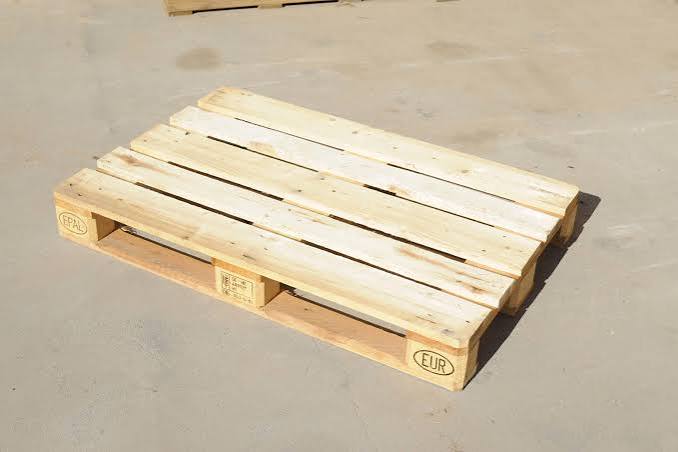
The standard Euro pallet size is 1,200 mm × 800 mm × 144 mm (length × width × height). This is the established specification set by the European Pallet Association (EPAL) for the EPAL Euro pallet, also known as EPAL 1. Having a fixed, standard size matters because it ensures compatibility across warehouse racking systems, forklifts, pallet jacks, trucks, containers, and international logistics networks. For UAE businesses involved in logistics, warehousing, manufacturing, retail, and import/export, understanding these exact dimensions helps prevent costly handling issues and ensures smooth integration with global supply chains.
What Is the Standard Euro Pallet Size?
According to EPAL, the standard EPAL Euro pallet has the following specifications:
- Length: 1,200 mm
- Width: 800 mm
- Height: 144 mm
- Weight: Approximately 25 kg
The construction features 11 boards, 9 blocks, and 78 nails, produced according to EPAL’s Technical Regulations.
Dimensions in Other Units
For easy reference, here are the standard Euro pallet dimensions converted to other common units:
In Centimeters:
- Length: 120 cm
- Width: 80 cm
- Height: 14.4 cm
In Meters:
- Length: 1.2 m
- Width: 0.8 m
- Height: 0.144 m
In Inches:
- Length: 47.24 inches
- Width: 31.50 inches
- Height: 5.67 inches
These conversions reflect the actual metric dimensions. In practice, when sourcing pallets in the UAE or internationally, the metric measurements (1,200 × 800 × 144 mm) are the reference standard.
Why Is the 1200 × 800 mm Size Important?
The standardized 1,200 × 800 mm footprint is not arbitrary. It is designed to optimize efficiency across multiple stages of the supply chain.
Warehouse Storage
The Euro pallet size fits standard warehouse configurations, allowing businesses to maximize storage density. Uniform pallet dimensions mean racking systems can be designed with precise bay widths and depths, reducing wasted space.
Pallet Racking
Most pallet racking systems in Europe and many export-oriented warehouses are built to accommodate the 1,200 × 800 mm footprint. Using non-standard sizes can lead to improper rack engagement, wasted rack capacity, or safety risks.
Trucks and Containers
The Euro pallet dimensions are optimized for truck trailers and shipping containers. A standard 40-foot container can efficiently hold 25 Euro pallets in a single tier, while a 20-foot container typically accommodates 11. This standardization streamlines loading plans and reduces wasted cargo space.
Forklifts and Pallet Jacks
The four-way entry design of the EPAL Euro pallet means it can be accessed from all four sides, making it compatible with virtually all standard forklifts and pallet jacks. This flexibility speeds up handling operations and reduces equipment compatibility issues.
Loading and Unloading
Standard dimensions allow automated conveyor systems, high-bay racking, and mechanized handling equipment to operate without adjustment. This is critical for high-throughput facilities that cannot afford downtime due to pallet size mismatches.
International Logistics
Euro pallets are part of a global exchange pool. Standard sizes enable pallets to be exchanged, reused, and repatriated across international supply chains without compatibility concerns.
Euro Pallet Size in Feet and Inches
For UAE businesses that work with imperial measurements or trade with partners in regions that use feet and inches, here are the accurate conversions:
- Length: 1,200 mm = 47.24 inches = approximately 3.94 feet
- Width: 800 mm = 31.50 inches = approximately 2.62 feet
- Height: 144 mm = 5.67 inches = approximately 0.47 feet
These conversions are precise metric-to-imperial calculations. The Euro pallet is not a round-number imperial size, which is why exact conversions result in decimals.
How Much Weight Can a Euro Pallet Hold?
It is important to distinguish between pallet dimensions and load capacity. A pallet’s size does not automatically determine how much weight it can safely carry.
EPAL specifies a safe working load of 1,500 kg for its standard EPAL Euro pallet under defined conditions. When stacking laden pallets on a solid, even surface, the bottommost pallet must not exceed a load of 5,500 kg.
This load rating applies specifically to genuine EPAL-certified Euro pallets produced according to EPAL’s technical requirements. A generic wooden pallet with 1,200 × 800 mm dimensions does not automatically carry the same load capacity. Construction quality, wood grade, and adherence to EPAL specifications all affect actual performance.
Standard Euro Pallet vs Other Pallet Sizes
The Euro pallet is one format within a broader family of pallet sizes. Understanding how it differs dimensionally helps businesses choose the right pallet for their needs.
EPAL 2: 1,200 × 1,000 mm
The EPAL 2 pallet has a different footprint: 1,200 mm × 1,000 mm, with a height of 162 mm and weight of approximately 35 kg. Its safe working load is 1,250 kg.
EPAL 3: 1,000 × 1,200 mm
The EPAL 3 pallet measures 1,000 mm × 1,200 mm, with a height of 144 mm and weight of approximately 30 kg. Its safe working load is 1,500 kg.
Half Pallets: 800 × 600 mm
Half pallets, such as the EPAL 6 and EPAL 7, measure 800 mm × 600 mm. The EPAL 6 has a height of 144 mm and weighs approximately 9.5 kg, with a safe working load of 750 kg. The EPAL 7 has a height of 163 mm, weighs approximately 9.5 kg, and has a safe working load of 500 kg.
These dimensional differences matter for racking configurations, container planning, and handling equipment.
Does Every 1200 × 800 mm Pallet Count as a Euro Pallet?
No. Having the same dimensions does not automatically make a pallet an EPAL-certified Euro pallet.
The distinction lies in certification and construction. Genuine EPAL Euro pallets carry specific markings, including the EPAL logo in an oval, an IPPC marking with heat treatment (HT) designation, a country code, the producer’s registration number, and an EPAL control staple.
These markings verify that the pallet was produced according to EPAL’s technical requirements and passed independent quality inspections. EPAL conducts more than 25,000 independent inspections annually through recognized inspection companies.
For international movement, EPAL Euro pallets are heat-treated according to ISPM 15 requirements. This treatment ensures they can cross borders without phytosanitary restrictions. A generic 1,200 × 800 mm wooden pallet without these markings may face customs delays or rejection in international shipments.
When certification is required for export or exchange purposes, verify that the pallet bears the complete EPAL marking set.
How to Choose the Right Euro Pallet for Your Business
Selecting the correct Euro pallet involves more than confirming the standard size. Consider these factors:
- Required dimensions: Confirm the 1,200 × 800 mm footprint matches your storage and transport requirements.
- Load requirements: Determine the maximum weight the pallet must support. EPAL Euro pallets are rated for 1,500 kg, but your specific application may require a different capacity.
- Storage/racking system: Ensure the pallet size is compatible with your existing racking and shelving.
- Handling equipment: Verify that your forklifts and pallet jacks can safely handle the pallet design and weight.
- Domestic vs international shipping: For export, ISPM 15 compliance and IPPC markings are essential. EPAL-certified pallets meet this requirement.
- New vs used pallets: New EPAL pallets offer maximum reliability; used pallets may suit internal operations at lower cost.
- Certified vs generic pallets: EPAL certification ensures quality standards, exchangeability, and international acceptance. Generic pallets may meet basic dimensional needs but lack these assurances.
Euro Pallet Size: Quick Reference
- Length: 1,200 mm (120 cm, 1.2 m, 47.24 inches)
- Width: 800 mm (80 cm, 0.8 m, 31.50 inches)
- Height: 144 mm (14.4 cm, 0.144 m, 5.67 inches)
- Weight (EPAL Euro pallet): Approximately 25 kg
- Safe working load (EPAL Euro pallet): 1,500 kg
- Construction: 11 boards, 9 blocks, 78 nails
- Certification markings: EPAL logo in oval, IPPC marking with HT, country code, producer registration number, EPAL control staple
- International compliance: Heat-treated according to ISPM 15
For UAE businesses, the standard Euro pallet size of 1,200 × 800 × 144 mm is the foundation for efficient logistics, warehousing, and international trade. By understanding these precise dimensions and the distinction between generic pallets and EPAL-certified Euro pallets, you can make informed procurement decisions that support your operational requirements and global supply chain integration.