
Introduction
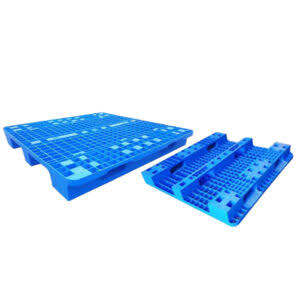
Pallets play an essential role in modern warehousing and logistics. They move goods, organize inventory, and support supply chains across industries. Among the different pallet options available, plastic pallets have gained attention for their reusability, consistent dimensions, and cleanability. However, not every plastic pallet is suitable for every application. The right choice depends on load requirements, handling equipment, storage conditions, and the specific needs of your operation. This guide explains what plastic pallets are good for, their advantages, and where they may not be the best option.
What Are Plastic Pallets Good For?
Plastic pallets are commonly used for moving goods, warehouse storage, distribution, reusable logistics systems, hygienic handling environments, export and international shipping, and retail supply chains. Their suitability depends on the specific pallet design and the operational requirements of the business.
Plastic Pallets for Warehousing
In warehouses, plastic pallets are used for organizing inventory, moving products with forklifts, pallet jack handling, temporary storage, and distribution. Businesses should select pallets based on their warehouse systems and handling equipment. Consistent dimensions can be useful for automated storage and retrieval systems (ASRS), where precise pallet sizing is important for smooth operations.
Plastic Pallets for Food and Beverage Industries
Plastic pallets are often used in food and beverage environments where cleanliness is important. Their non-porous surfaces can be easier to clean than wood, reducing the risk of contamination. Some plastic pallet designs comply with food safety standards such as HACCP and GMP, though businesses should verify specifications with their supplier. These pallets do not absorb moisture, oils, or food residues, which can be an advantage in handling fresh produce, meat, dairy, and packaged goods.
Plastic Pallets for Pharmaceutical and Healthcare Logistics
Pharmaceutical and healthcare logistics require strict hygiene standards. Plastic pallets are used because they can be sanitized, do not splinter, and do not absorb chemicals or moisture. They are suitable for cleanroom environments and for handling pharmaceutical products, medical supplies, and laboratory equipment. However, specific industry requirements should be checked before selecting a pallet.
Plastic Pallets for Export and International Shipping
Plastic pallets are often used for international shipping because they generally do not require ISPM 15 heat treatment, which is mandatory for wooden pallets used in export. This can simplify customs clearance and reduce the risk of shipment delays. However, businesses should always check the packaging and import requirements of the destination country.
Plastic Pallets for Retail and Distribution
Plastic pallets are used in retail distribution centers, supermarkets, e-commerce warehouses, and wholesale operations. Their consistent dimensions and reusability support repeated movement within supply chains. For example, major UK retailers use plastic pallets in their logistics networks to reduce waste and improve efficiency.
Plastic Pallets for Cold Storage
Plastic pallets are often used in cold storage environments because they do not absorb moisture and are not prone to warping, splintering, or rotting. Unlike wood, which can degrade in high-humidity or freezing conditions, plastic pallets maintain their structural integrity. However, businesses should check the manufacturer’s recommended operating conditions, as not every plastic pallet is suitable for extremely low temperatures.
Main Benefits of Plastic Pallets
1. Reusability
Durable plastic pallets may be used repeatedly depending on their design and handling conditions. This can reduce long-term replacement costs compared to single-use wooden pallets.
2. Easy Cleaning
Many plastic pallet designs can be easier to wash than certain wooden alternatives. They do not absorb moisture, oils, or chemicals, making them suitable for industries with strict hygiene requirements.
3. Consistent Dimensions
Plastic pallets offer consistent sizes, which is useful for automated systems, warehousing, storage planning, and material handling. This consistency can improve efficiency in high-volume operations.
4. No Wooden Splinters
Plastic pallets do not produce wood splinters, which can be beneficial in workplaces where product protection and worker safety are important.
5. Moisture Resistance
Plastic materials generally do not absorb moisture in the same way as untreated wood. This makes them useful in environments with high humidity, exposure to liquids, or cold storage.
6. Long-Term Reuse
Reusable plastic pallets may offer long-term value for closed-loop logistics systems. They can be returned, cleaned, and reused multiple times, reducing waste and material costs.
Limitations of Plastic Pallets
Plastic pallets have some limitations. They typically have a higher initial purchase cost than wooden pallets. Their load capacities vary by design, and they may be damaged by severe impacts. Unlike wood, many plastic pallet designs are not easily repaired, and compatibility with warehouse systems should be checked. Recycling considerations also vary by material type.
Plastic Pallets vs Wooden Pallets
Plastic pallets offer reusability, cleanability, consistent dimensions, and moisture resistance. Wooden pallets are widely available, have different cost structures, are repairable in some cases, and are suitable for various industrial applications. Neither material is automatically best for every situation. The choice depends on your specific operational needs.
What Industries Use Plastic Pallets?
Plastic pallets are used in food and beverage, pharmaceuticals, retail, manufacturing, automotive, e-commerce, logistics, cold storage, and chemical handling where suitable for the application. Pallet selection should consider the specific operational environment.
How to Choose the Right Plastic Pallet
Before purchasing, consider the required load capacity (static load, dynamic load, and racking load), pallet dimensions, forklift compatibility, pallet jack compatibility, storage environment, temperature conditions, hygiene requirements, and reusability requirements. Request technical specifications from your supplier.
Are Plastic Pallets Worth the Cost?
Plastic pallets may be worth the investment for businesses that need reusable, consistent, and easy-to-maintain pallets. However, the initial purchase cost and application requirements should be considered. To decide, calculate expected usage, replacement frequency, cleaning requirements, handling needs, and total cost of ownership rather than comparing only the purchase price.
Conclusion
Plastic pallets are good for many applications, including warehousing, storage, transportation, distribution, and reusable supply chains. Their suitability depends on the specific design, load requirements, industry, and operating environment. To make the right choice, compare plastic pallet specifications and consult a reliable UAE pallet supplier before making a purchase.