
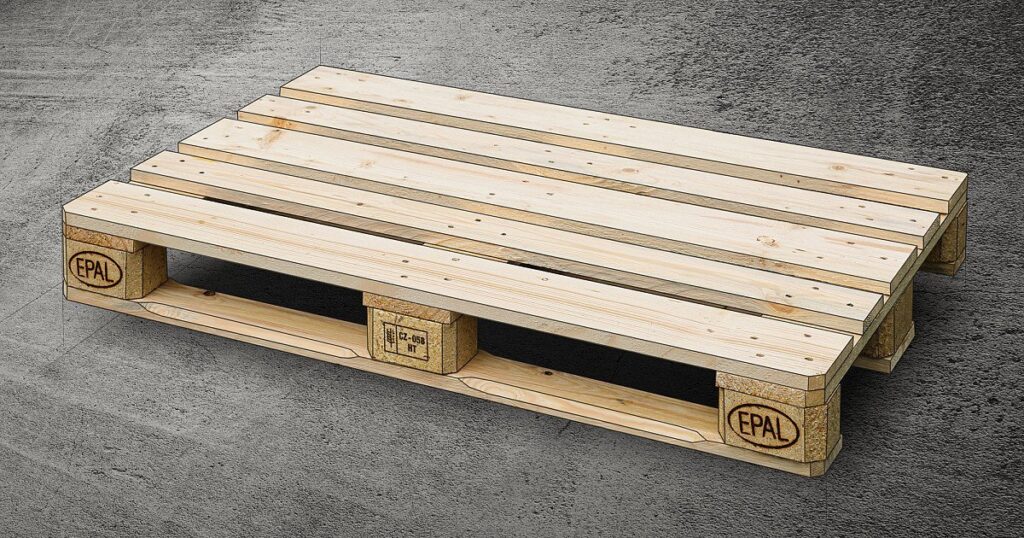
When you think of logistics in the UAE, towering skyscrapers and bustling ports like Jebel Ali come to mind. But beneath this surface of global trade lies a humble hero: the Euro pallet. Officially known as the EUR/EPAL pallet, this wooden platform is redefining efficiency for warehouses in Dubai, Abu Dhabi, and Sharjah.
While local SABS-style pallets are common, Euro pallets offer a unique blend of standardization that the UAE’s diverse import/export market desperately needs. Here is why switching to EPAL is a strategic move for UAE businesses.
1. The “Plug and Play” of Global Shipping
The UAE is a transshipment hub. Goods arrive from Europe, are stored in Dubai South, and are re-exported to Africa or Asia within 48 hours. Euro pallets are the only pallet with a globally recognized repair standard. When a European manufacturer sends a machine to JAFZA (Jebel Ali Free Zone) on a Euro pallet, that pallet can be sold back into the system or exchanged in the local market without remeasuring. For UAE logistics managers, this means zero downtime re-palletizing goods.
2. Defeating the Humidity & Heat
Standard local pallets often warp or splinter under the UAE’s extreme summer humidity and heat. Euro pallets are constructed using specific climatic treatment (ISPM 15) but with tighter nail patterns and specific wood grades. They are engineered to hold 1,500 kg of static load. In a non-climate-controlled warehouse in Dubai Industrial City, a Euro pallet retains its integrity weeks longer than generic alternatives, reducing product damage from collapsing stacks.
3. Cost-Efficiency in the Reverse Logistics Loop
The most underrated benefit in the UAE is the “Pallet Pooling” system. Due to the high volume of European imports, a major pain point for local businesses is dead stock—piles of unusable pallets. Euro pallets are repairable and buy-back guaranteed. A logistics manager in Abu Dhabi can purchase 500 Euro pallets, use them for local distribution to supermarkets, and sell the broken ones back to a repair center in Ras Al Khor at a fixed rate. You aren’t buying a pallet; you are renting a logistics asset.
4. Automation Compatibility
The UAE is racing toward automated warehousing. Euro pallets adhere to strict dimensional tolerances (1200x800mm). This allows automated guided vehicles (AGVs) and robotic cranes—common in new UAE fulfillment centers—to pick them up flawlessly. Odd-sized local pallets cause sensor jams; Euro pallets keep the robot army moving.
Conclusion
For the UAE trader, a pallet isn’t wood; it’s a tool for speed. Whether you are storing construction materials in RAK or perishable goods in Dubai, the Euro pallet offers the structural science required for this extreme climate. Standardize on EPAL, and watch your supply chain friction disappear.