
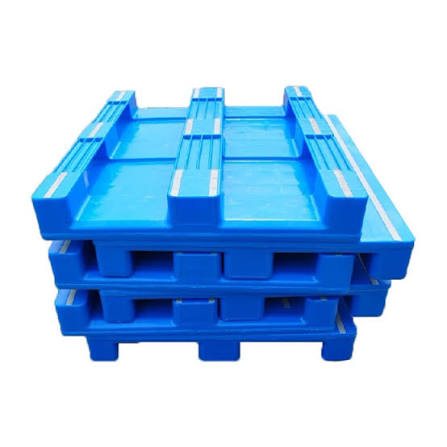
Are Plastic Pallets Resistant to Moisture and Chemicals?
Plastic pallets are widely used in warehouses, manufacturing facilities, food processing, and logistics because they offer good resistance to moisture and many chemicals. Unlike wooden pallets, they do not absorb water, rot, or develop mould easily. However, their resistance depends on the type of plastic used and the chemicals they come into contact with.
For businesses in the UAE, plastic pallets can be a practical choice for humid environments, cold storage, and operations that require frequent washing.
Are Plastic Pallets Resistant to Moisture?
Yes. Most plastic pallets are highly resistant to moisture because they are made from non-absorbent materials such as high-density polyethylene (HDPE) or polypropylene (PP).
Their moisture-resistant properties offer several advantages:
- No water absorption: Plastic does not absorb water like wood.
- No rotting: Moisture does not cause plastic pallets to rot.
- Reduced mould risk: They do not provide the same conditions for mould growth as damp wooden pallets.
- Easy cleaning: Their surfaces can generally be washed and dried quickly.
- Suitable for humid environments: They can be used in areas where moisture exposure is common.
Plastic pallets are often suitable for cold storage, food handling, pharmaceutical operations, and other environments where cleanliness and moisture resistance are important.
Are Plastic Pallets Resistant to Chemicals?
Plastic pallets can resist many chemicals, but they are not resistant to every chemical. Their performance depends on the plastic material, chemical concentration, temperature, and length of exposure.
HDPE Plastic Pallets
HDPE pallets generally provide good resistance to many acids, alkalis, salts, and common cleaning agents. They are often used in chemical storage and industrial applications.
Polypropylene Plastic Pallets
Polypropylene pallets also offer good resistance to many chemicals and can perform well in certain industrial environments. Their suitability depends on the specific chemical and operating conditions.
Before using plastic pallets for chemical handling, businesses should confirm that the pallet material is compatible with the chemicals involved.
What Factors Affect Chemical Resistance?
Several factors can influence how a plastic pallet performs:
- Plastic type: HDPE and PP have different chemical resistance properties.
- Chemical type: Some solvents and aggressive chemicals may damage certain plastics.
- Concentration: Highly concentrated chemicals can behave differently from diluted solutions.
- Temperature: Higher temperatures may increase the risk of chemical damage.
- Exposure time: Repeated or prolonged contact may affect the material.
- Pallet design: Load capacity and structural design must also suit the application.
Plastic Pallets vs Wooden Pallets
| Feature | Plastic Pallets | Wooden Pallets |
|---|---|---|
| Moisture resistance | Generally high | Can absorb moisture |
| Rotting risk | Does not rot like wood | Can rot if exposed to moisture |
| Mould risk | Lower, depending on cleanliness | Higher when damp |
| Chemical resistance | Depends on plastic and chemical | Depends on wood, treatment, and chemical |
| Cleaning | Usually easier | Can be more difficult |
| Repair | Often harder to repair | Some damage may be repaired |
| Cost | Often higher upfront | Often lower upfront |
Are Plastic Pallets Suitable for Chemical Warehouses in the UAE?
Plastic pallets may be suitable for chemical warehouses in the UAE, especially where moisture resistance, easy cleaning, and consistent pallet quality are important.
However, the pallet should be selected based on the exact chemical products being stored or transported. Businesses should review the pallet manufacturer’s chemical compatibility information and ensure the pallet’s load rating is appropriate.
For hazardous chemicals, the pallet itself is only one part of the safety process. Containers, spill control, storage conditions, and handling procedures must also meet the relevant requirements.
Frequently Asked Questions
1. Can plastic pallets be used in wet environments?
Yes. Plastic pallets are generally suitable for wet environments because they do not absorb water or rot like wooden pallets.
2. Can plastic pallets handle cleaning chemicals?
Many plastic pallets can handle common cleaning chemicals, but compatibility should be checked with the manufacturer, especially for strong or concentrated chemicals.
3. Are all plastic pallets chemically resistant?
No. Chemical resistance varies according to the plastic material and the chemical involved. Some solvents and harsh chemicals may damage certain plastics.
4. Are plastic pallets suitable for food and pharmaceutical storage?
They are often used in these industries because they are easy to clean and moisture-resistant. The pallet must still meet the relevant hygiene and operational requirements.
5. How can businesses confirm chemical compatibility?
Businesses should identify the chemical, concentration, temperature, and expected exposure time, then check the manufacturer’s compatibility guidance or request technical confirmation.
Conclusion
Plastic pallets are generally resistant to moisture and many common chemicals, making them useful for warehouses, cold storage, food handling, and industrial operations. HDPE and polypropylene are common materials, but neither should be assumed to resist every chemical.
For safe and reliable use, businesses should confirm material compatibility, load capacity, and operating conditions before selecting plastic pallets for chemical storage or transport.