
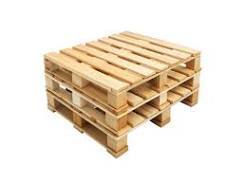
A Wooden Rectangle That Runs a Continent
At first glance, the euro pallet looks like any other wooden platform—rough-hewn boards, block feet, and metal nails. But look closer. Stamped into two opposite corner blocks is an oval brand reading “EUR,” flanked by cryptic codes and a fiery wheel symbol. This marking transforms ordinary lumber into one of the most rigorously standardized shipping tools on Earth. Unlike generic wooden pallets that vary wildly in size and quality, the euro pallet—officially known as the EPAL pallet (European Pallet Association)—obeys a design locked down since 1961. Its dimensions are 1200mm x 800mm, and deviating by even a few millimeters means rejection from the continent’s vast pallet-pooling networks.
The Secret Language of Nails and Wood
What makes a euro pallet truly unique is its forensic-level construction rules. An authentic EPAL pallet uses exactly 78 specially designed nails—no more, no less—each driven to a precise depth. The wood itself must be debarked, insect-free, and sourced from sustainable European forests, typically spruce, pine, or fir. Stringent heat treatment (ISPM 15 standard) stamps every board, ensuring no pests hitchhike across borders. The nine block feet—distinct from the stringer design of American pallets—allow four-way entry from any side, a critical feature for automated European warehouses. Counterfeit pallets flood the market, but experts can spot fakes instantly: wrong nail pattern, non-beveled edges, or missing the mandatory “EUR” brand burned into the wood under high heat.
The Closed-Loop Dance of the Pooling System
Here is where the euro pallet outperforms all rivals: it never belongs to anyone permanently. Companies pay a deposit—typically €15–25 per pallet—and return it to a pool managed by EPAL or CHEP. The pallet then travels from a Polish apple orchard to a German juicing plant, then to a Dutch supermarket distribution center, then to a French recycling depot. A single euro pallet makes an average of 12–15 trips before retirement, compared to 3–5 trips for non-pooled wooden pallets. GPS tracking and barcodes now monitor each unit, yet the system remains remarkably low-tech at its core: trust in the stamped logo and the nail count.
The Environmental Accounting Few Discuss
Critics who celebrate plastic pallets as “greener” overlook a startling fact: the euro pallet’s pooling model creates one of the most efficient circular logistics systems ever designed. Because pallets are returned rather than discarded, waste approaches zero. When a euro pallet finally breaks beyond repair—after up to a decade of use—every splinter is reclaimed. Damaged boards become new pallet components or biomass energy. The ISPM 15 heat treatment eliminates chemical fumigation. A 2022 life-cycle assessment found that a pooled euro pallet generates 60% less CO₂ per trip than a single-use wooden pallet and 45% less than a plastic pool pallet. The wood itself stores carbon for its entire lifespan.
Why the EUR Brand Still Commands Respect
In a world of disposable logistics, the euro pallet stands as an outlier—a standardized, repairable, traceable asset that moves seamlessly from Sicily to Stockholm without paperwork delays. Its dimensions match European truck and container widths perfectly, leaving zero wasted space. The next time you see a stack of pallets behind an IKEA or a Lidl, scan for that oval brand. You’re not looking at scrap wood. You’re looking at the most disciplined, efficient, and quietly revolutionary shipping platform ever built—one nail at a time.