
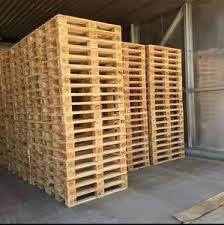
More Than Stacked Slats
When you glimpse a wooden pallet behind a grocery store or stacked in a warehouse yard, you’re not seeing discarded lumber—you’re witnessing the silent skeleton of modern commerce. Roughly 95% of all world trade touches a pallet at some point, and the vast majority of those are crafted from wood. Yet this humble platform, typically consisting of top decks, stringers, and bottom decks, rarely earns the recognition it deserves. It is the quiet workhorse that turned scattered cardboard boxes into a synchronized global dance of goods.
The Hidden Engineering in Every Board
A well-constructed wooden pallet is a marvel of distributed load management. Unlike plastic or metal alternatives, wood possesses natural shock absorption and thermal resistance. When a forklift’s tines slide into a pallet’s openings, the forces spread unevenly—yet the wood flexes without fracturing, then returns to its shape. Manufacturers often use mixed hardwoods like oak or maple for heavy loads, while softer pine or poplar suits lighter, single-use shipments. The real ingenuity lies in the assembly: nails driven at specific angles, stringers notched to prevent splitting, and deck boards gapped to allow drainage and airflow. No two pallets are exactly alike, because wood is a living record of growth rings, knots, and grain patterns—each influencing its unique breaking point.
A Second Life Woven Into Logistics
What makes wooden pallets truly extraordinary is their circular economy. A single pallet might begin its life carrying ceramic tiles from Spain, then be repaired in a Dutch depot, later transport automotive parts to Germany, and finally get chipped into garden mulch in Sweden. The wood pallet industry has developed a sophisticated repair ecosystem: workers flip damaged units, hammer out broken boards, replace crushed stringers, and send them back into circulation. According to industry estimates, up to 95% of wooden pallets are recovered and reused, compared to only 10-20% of plastic ones. When a pallet is beyond repair, its fibers become animal bedding, biofuel, or engineered particleboard—nothing goes to waste.
The Unexpected Environmental Champion
Critics often assume wooden pallets drive deforestation, but the reality contradicts the myth. Most pallet manufacturers use low-grade lumber rejected by furniture and construction industries—trees that would otherwise be left to rot or burned. Furthermore, the carbon footprint of a wooden pallet is significantly lower than plastic over its lifecycle. Wood sequesters carbon; plastic emits it during production. A study from Virginia Tech found that wooden pallets require 46% less energy to produce than plastic ones and generate 83% less greenhouse gas emissions. When you factor in repairability and biodegradability, the humble wooden pallet emerges as an unsung environmental ally.
Why It Will Never Be Obsolete
Despite sleek automation and AI-driven warehouses, the wooden pallet endures because it solves a problem no algorithm can fix: friction. Wood grips boxes better than slippery plastic. It doesn’t conduct extreme cold, so frozen goods stay stable. It absorbs vibration, protecting fragile cargo. And most importantly, it costs a fraction of any alternative—around $10–15 for a new unit, versus $60+ for plastic. As long as trucks rumble down highways and ships cross oceans, the wooden pallet will remain the quiet, splintered, indispensable floor beneath everything we buy.